Language
EN

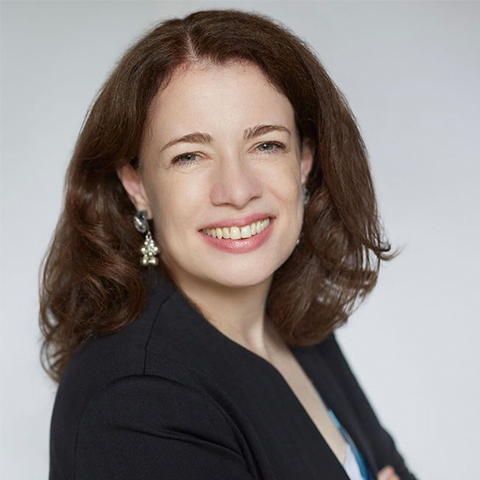
Topic: Cybercriminals are increasingly targeting small businesses, exposing a weak link in critical supply chains. Yet cybersecurity solutions have yet to democratize protection and make security accessible and affordable these businesses. The needs range from awareness and education services through to strategic and innovative solutions. In this talk, we will explore such technological vectors and solution development strategies, highlighting the potential of this underserved market.
Speaker: Nicola has been in Japan for 30 years, with a career spanning both governmental and corporate sectors in international standards and cybersecurity strategy. Passionate about promoting safer, confident ways to live our digital lives, Nicola now runs her own market entry & cyber compliance advisory for SMEs. She is a Consulting Partner at the impact-focused change management firm Global Perspectives K.K., and an elected Executive Committee member of the British Chamber of Commerce Japan (BCCJ). Nicola is a sought-after panel moderator on topics such as emerging tech, AI value creation and global trade volatility. She is a graduate of the Advanced Management & Leadership Programme, Saïd Business School, University of Oxford, and holds an MBA, a BSc, JLPT N1 (advanced Japanese) and is working towards her CX & AI Diploma. In her spare time, she can be found traveling around the islands of Japan.
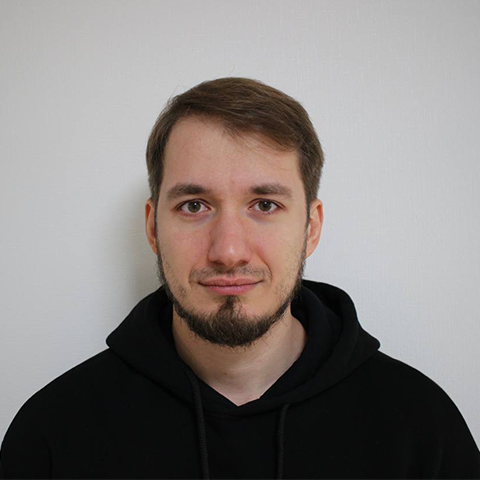
Topic: We explore the most advanced method to verify software. We will compare conventional testing strategies and their limits, and also explore using mathematical modeling to find errors that standard testing can’t discover.
Speaker: As the CEO of Inferara (Japan). Georgii has been involved in software development, blockchain system analysis, and security initiatives. He has been coding for more than a decade. Primarily focusing on formal-languages, compilers, and automated theorem proving for software verification. Developed static analyzers for Ethereum, Stellar, and Midnight (Cardano), designed for vulnerability detection and to mitigate potential hacks. Over the past 3 years, Georgii has been working to make formal verification accessible for everyday developers. As the lead of the Inference programming language team, he continues to contribute to open-source solutions that aim to further secure both finance and traditional software systems.

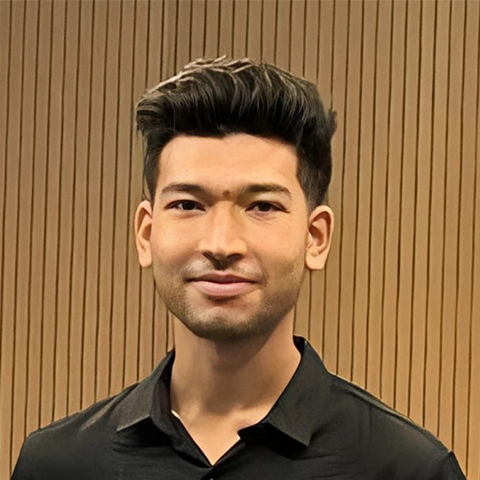
Why Post-Quantum Cryptography Is Critical for Digital Security Today: With the rise of quantum computing, many of today’s cryptographic algorithms and the security protocols that rely on them are becoming vulnerable. This session examines how OpenSSL is preparing for the post-quantum era and how crypto agility helps organizations adapt to future cryptographic threats.
Quantum-Resilient AI: How Confidential Computing and OpenSSL Secure the Future: As artificial intelligence becomes central to modern systems, protecting sensitive data and models is more critical than ever.This talk explores how confidential computing and OpenSSL enable quantum-resilient AI by securing data in use and preparing systems for the post-quantum era.
James Bourne: James is an information technology professional specialising in cybersecurity and software development, predominantly, in the media and entertainment industry. In addition to technical disciplines, his expertise includes strategy, operations, governance, accounting, budgeting, negotiation, talent acquisition, team building, and mentoring. James’ roles and titles include: CEO of FireDaemon Technologies Limited. Media & Entertainment Cybersecurity and SSDLC Specialist. TPN Assessor. Animation, VFX, and Post Production Systems Administrator and Engineer.
Aditya Koranga: Aditya Koranga is the Technical Advisory Committee(TAC) Representative for Individuals at OpenSSL Corporation. With over five years of experience in post-quantum cryptography, he is also the TAC Vice Chair of the Post-Quantum Cryptography Alliance(PQCA) under the Linux Foundation and he works as Principal Security Architect at PQStation Singapore and actively supports open source through his not-for-profit NgKore Foundation. Outside of work, he is a writer, poet, and occasional rapper who enjoys reading RFCs before bed.
Paul Yang: Paul Yang is the Technical Advisory Committee(TAC) Representative for Small Businesses at OpenSSL Corporation and has been contributing to the OpenSSL project since 2017. He began his cybersecurity career in 2008, working on network firewalls and cloud security, and later led encryption initiatives for critical platforms at Alibaba. He is the founder of a music technology startup that relies on cryptography to protect customer data, musical intellectual property, and secure remote music education and currently works at Lenovo on privacy & confidential computing. Outside of work, he enjoys reading manga(a lot :).

Topic: As data volumes continue to grow at an unprecedented pace, organizations are generating far more signals than they can effectively use. This presentation explores why monitoring can no longer be treated as a purely technical function, but has become a critical part of business decision-making under uncertainty. By connecting infrastructure, security, and business data into a single context, organizations can move from fragmented observations and guesswork to faster investigations, clearer root-cause analysis, and confident, data-driven responses.
Speaker: A senior analytics and data engineering professional with extensive experience in designing and deploying large-scale monitoring and SIEM platforms. Lead architect and developer of the SAF monitoring system, with hands-on leadership of some of the largest implementations processing over 2 million events per second. Has led complex, multi-country SIEM deployments, consolidating security and operational monitoring into centralized platforms. Also an active educator, teaching data analytics and data engineering courses and bridging deep technical expertise with business-level decision making.